Death Cleanup
Cleaning a home after someone dies, including fluids, odor and affected belongings.
See death cleanupSort, pack and remove belongings from a home, apartment, garage or storage area in Tremont after a death. Important documents and keepsakes are set aside under your instructions.

Once the family or a legal representative is ready to empty a property following a death, the structured sorting, packing and removal of the person's possessions is called an estate cleanout.
The work can include a home, apartment, garage, attic, storage unit or outbuilding. Personal property is separated into categories you approve, such as items to keep, documents to examine, items intended for donation, recyclable materials and ordinary waste. Furniture and appliances can then be moved out, and the rooms can be left empty for the next stage.
Estate cleaning is different from death cleanup. If a person died in the home but no bodily fluids affected the property, the job may only require careful sorting and general cleanout services. If there was an unattended death, visible blood, strong odor or contaminated materials, biohazard cleanup must come before workers sort the surrounding areas. That sequence protects family members and anyone entering the affected area.
A thoughtful estate cleanup service also protects the things that are easy to miss. You should have an opportunity to examine saved medication, family mementos, money, photos, legal papers, keys and jewelry. You may set priorities ahead of the cleanup process and divide decisions into stages when the property holds many items.
The crew uses unmarked vehicles, protects shared paths and keeps bags or cartons discreet outside the property.
To move forward, use pictures, documented scope and expense invoices in conversations with relatives, estate representatives and insurance companies.
You decide how items are sorted, what receives priority and what may be removed before the first step begins. When relatives need time to decide, the process can stop temporarily.
Photos, documents, valuables and named keepsakes are separated for you to examine instead of being mixed with ordinary removal items.
When belongings must be cleared following a death, estate cleanout services give families, executors, landlords and property owners an orderly approach. Common examples are:
The affected area undergoes biohazard remediation first, then contents in safe spaces can be examined and removed.
The home's ordinary contents need sorting, packing and removal following a care-setting death or one witnessed by relatives.
Whoever has estate authority needs visual records, step-by-step decisions and a removal log for the property.
The approved sorting plan also applies to tools, files, furniture, chemicals and boxes stored beyond the primary living area.
Confirm who is authorized to make estate decisions and make the property secure before anything else. To keep cleaning and removal from becoming confusing, begin with these steps:
Call (888) 440-9227Estate cleanout prices listed by the veteranhauling.com cost guide are $1,000 to $3,000 when a smaller home has one to two bedrooms, $3,000 to $7,000 when a mid-size home has three to four bedrooms and $7,000 to $15,000 when a home is large or heavily furnished. For one truckload, its load-based junk removal range begins at $300 and ends at $800 according to that guide. The contents present, needed disposal and property access affect your price.
Published national cost guides are the source for these ranges, rather than an inspection of your property. The price for your property is set after the on-site assessment, and you hear it before work starts.
Ask about cost: (888) 440-9227Ordinary estate clearing is not automatically covered by insurance, though cleanup connected with a covered loss may qualify under the policy. Without coverage, payment often falls to the property owner or estate.
The lease, area regulations and control of the contents may determine responsibility. Get authorization before you take personal property belonging to a tenant or alter the space.
Homeowners or renters insurance, the estate or the property owner usually pays for this kind of cleanup. The Illinois crime victim compensation program helps only when a crime caused the loss.
Contact the insurance company to confirm coverage for the damage source and any death cleanup or biohazard work, along with the documents needed. Coverage depends on the policy and event.
The person managing the estate may ask an appropriate legal or financial adviser if estate money can cover clearing expenses. File invoices with removal records.
A controlled estate cleanout starts by confirming entry and concludes with the final inspection of the property. At each point, you can approve the work and specify anything that must remain.
You or your representative checks each room, access point and priority item. Crews mark affected areas and possible hazards ahead of the sorting work.
Belongings are assigned to categories you choose, such as keep, family decision, intended donation, recycling, ordinary disposal and special disposal.
A protected decision space holds identification, financial documents, photos, keys, valuables and requested keepsakes so they do not enter the removal group.
When contamination is present, cleanup crews isolate the affected area, wear protective equipment and complete the remediation process before general sorting resumes.
Kept items receive clear labels and are packed by category or the room where they belong. For a more manageable examination, delicate objects and records go into separate groups.
A planned exit path is used to remove authorized furniture, cartons and regular debris. The correct waste disposal route is used for special materials.
After a room has been cleared, its dust and normal residue can be removed. Any persistent odor is traced to its source before odor removal is considered complete.
You can examine each cleared space, check the property set aside and identify repair or restoration services needed ahead of the transfer.
Phone any hour. An estate cleanout after a death specialist answers, explains the steps and agrees a start time with you.
Most estate belongings are not biohazards, but a home can contain risks that should be identified before sorting begins.
Every item may carry a memory. You can move forward without hurried choices by writing a keep list and reviewing belongings in small groups.
Carpet, padding, furniture, drywall or subfloor touched by bodily fluids may need professional cleanup and regulated waste disposal before general contents are moved.
Blood and bodily fluids can contain bloodborne pathogens. Material does not become safe simply because it dried. The CDC states that surfaces can harbor hepatitis B for at least seven days.
Can you clean it yourself? If concealed contamination is discovered, a general cleanout crew should pause work. Put on gloves for a little fresh blood on non-porous, hard material, and observe the full contact time of an EPA-registered disinfectant. The estate work should pause for professional biohazard cleanup if blood soaked into wood, textiles, carpeting or other absorbent material.
Before anything is considered waste, it needs sorting according to the plan you approved. Separate routes are needed for personal possessions, normal debris and hazardous material.

Only a person with the proper authority should approve access, sale, donation or disposal. A qualified local professional can explain the applicable estate and court requirements when ownership remains in question.
The OSHA Bloodborne Pathogens Standard, 29 CFR 1910.1030, sets requirements for training, protective gear and work practices when workers may be exposed to blood.
Illinois treats soaked materials from a biohazard scene as potentially infectious medical waste (PIMW). Illinois EPA rules control how it is packed, transported and treated, so it cannot go in household trash. Different disposal methods can apply to ordinary goods, chemicals, electronic equipment, sharps and contaminated materials.
Tazewell County uses an elected coroner, like most Illinois counties. The office responsible for a death depends on the county where it happened. Cleanup starts after police or the coroner or medical examiner release the scene. When law enforcement or a medical examiner or coroner participates, do not start scene cleaning or removal until officials release the affected room or property.
There is no single timeline for an estate cleanout. A lightly furnished small home may take one work period, while a full home with careful family sorting can require several visits. Biohazard work, access limits and delayed decisions add time.
The full estate cleanout after a death guide covers what is cleaned or removed, odor and air quality work, and the rules that apply in your state.
Read the full estate cleanout after a death guidePlanning for access, containment and cleanup can depend on local population, housing and entry conditions.
With a 32.1% renter share, some cleanup calls require a tenant and property owner to agree on access and material removal.
A median build year of 1963 means fluids can pass through carpet or seams and affect padding or subfloor below.
With 42.3% of seniors living alone, an unattended illness or death may go unnoticed, increasing the area affected by fluids and odor.
Detached and single-family properties account for 87.7% locally, so exterior access and safe waste movement should be planned early.
Your phone conversation can include questions about service in nearby ZIP codes and communities.
Cleaning a home after someone dies, including fluids, odor and affected belongings.
See death cleanup
Cleanup after an undiscovered death includes odor control and the effects of days of decomposition.
See unattended death cleanup
Careful work in the family home follows when a death is discovered quickly.
See attended death cleanup
Floors, underlying subfloors and furniture are cleared of decomposition fluids.
See decomposition cleanup
Death odor removal at the source with air scrubbers, hydroxyl and ozone treatment.
See death odor removal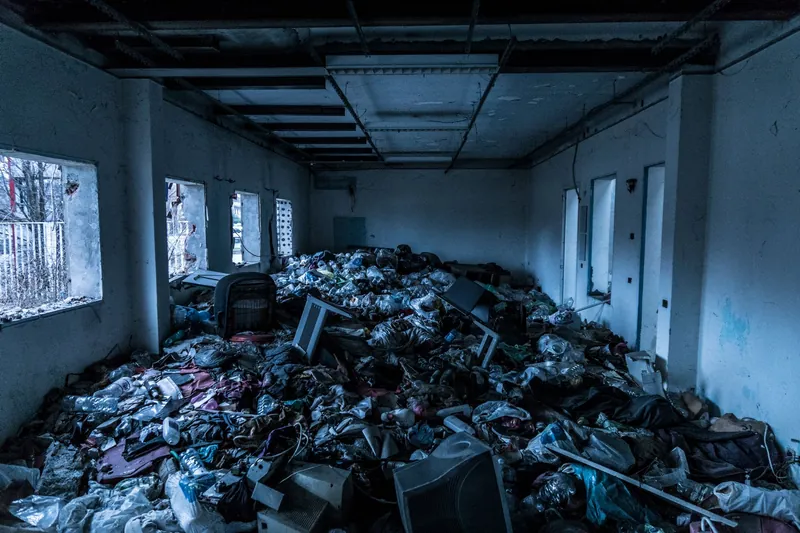
Hoarding cleanup with respectful sorting, removal and deep cleaning.
See hoarding cleanup
Hoarder house cleanout from the first room to the last, with trash hauled away.
See hoarder house cleanout
Sealed containers with labels hold biohazard waste during collection and disposal.
See biohazard waste disposalPause all sorting near the affected area. Keep people and pets away, do not pick up loose sharps by hand and do not mix contaminated materials with household trash. A professional cleanup assessment can establish the protective equipment, decontamination and waste disposal measures needed to restart nearby estate work safely.
Start with items that are easy to identify and difficult to replace, such as identification, estate papers, photographs, keys, jewelry, cash, medication and named keepsakes. You do not need to move heavy contents yourself. Make a written priority list so important items can be found during the sorting process.
Separate mail, financial papers, identification and electronics for inspection so private items do not mix with ordinary refuse. The authorized representative can decide what must be retained and arrange secure destruction for approved records. Devices may hold private information even when they no longer work, so they need a deliberate decision too.
No. An estate cleanout centers on sorting contents and emptying the property. Unattended death cleanup focuses on bodily fluids, contaminated materials, odor and safe waste disposal. For properties needing both services, the affected area undergoes biohazard remediation by cleanup crews ahead of any general estate work in safe parts of the property.
Do not assume a homeowners policy covers an ordinary cleanout of estate contents. Depending on its terms, the policy might cover cleaning tied to a covered event, including certain damage related to a death. Reach out to the insurance company with the loss details and confirm the terms for cleaning, personal property and documentation.
A sorting category can identify potential donations while leaving acceptance decisions to the organization receiving them. Condition, safety rules and current needs can affect what it takes. Learn which organization would receive the items, and verify whether it takes damaged goods, mattresses, medical equipment or chemicals.
Discreet, respectful estate cleanout after a death, 24 hours a day, with crews in unmarked vehicles.